With a Will and Without: What Changes
How a will changes the estate process, what happens when there is none, and why a will does not remove the need for an application.
Updated 4 September 2026 · Written and reviewed by Nur Nabilah Binti Mohd Aris

Dying without a will means the estate is divided under the Distribution Act 1958 or faraid, not by the deceased's wishes. A will decides who administers the estate and, for non-Muslims, who receives what. It does not remove the application: the executor must still obtain probate. Without a will, a beneficiary applies for letters of administration, and distribution follows the law that applies to the deceased.
What this dying without a will guide covers
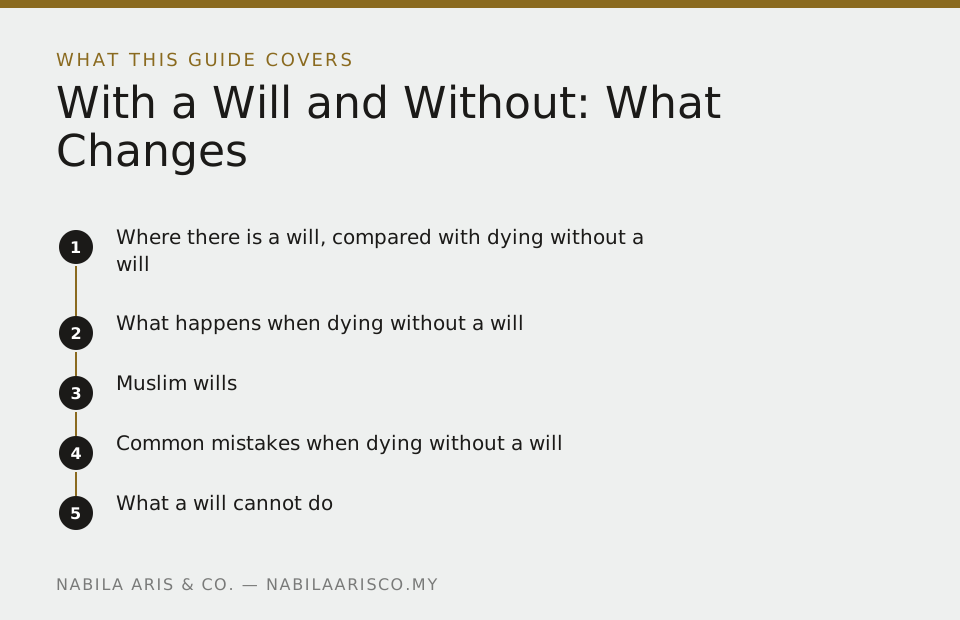
A will changes two things in an estate matter: who administers it, and for non-Muslims, who receives what. It does not make the process unnecessary.
Where there is a will, compared with dying without a will
A will names an executor. That executor must apply to court for probate before acting for the estate. Until the grant is issued, the executor has no authority to sell, transfer, or draw on the deceased’s accounts.
What a will saves is not the application step but the disputes: who should administer, and for non-Muslims, how the estate is divided.
What happens when dying without a will
With no will there is no named executor. A beneficiary applies for letters of administration, and the court decides who is appointed as administrator. That application commonly requires sureties or a bond, depending on the circumstances.
Distribution then follows the law: faraid for Muslims, confirmed by a faraid certificate from the Syariah Court, and the Distribution Act 1958 for non-Muslims.
Muslim wills
A Muslim will works differently from a non-Muslim will. It is subject to limits, and the balance of the estate is still distributed according to faraid. Families who want to give more to a particular person often need to consider lifetime instruments rather than a will alone.
Common mistakes in a will, and when there is none
- Assuming a will means no court application is needed
- Keeping the will somewhere nobody knows about
- Naming an executor who has since died or does not want to act
- An old will never updated after a divorce, a marriage or a new property purchase
- Assuming a will disposes of a matrimonial property claim
Naming an executor without a substitute is the one we see most. If the executor dies first or declines to act, a further application is needed.
Storing the original where it cannot be reached without a grant of probate is the next. A bank safe deposit box is the classic example.
Not updating after a major change in life is the third. For non-Muslims, marriage can revoke an earlier will, and many people do not realise it.
And using vague descriptions of assets. Referring to the house in Shah Alam without title particulars raises questions if the deceased owned more than one property.
What a will cannot do
A will does not avoid a court application. The executor still has to apply for probate before acting on the assets.
A will does not transfer land automatically either. Once probate is granted, a further step is needed to register the transfer to the beneficiaries.
For Muslims, testamentary freedom is limited to one third of the net estate in favour of non-heirs, unless the other heirs consent. The balance follows faraid.
If a will surfaces after the application has started
If an application for letters of administration has begun and a will is then found, that application has to be withdrawn and a probate application filed instead.
For that reason, search carefully for a will before starting anything. Check the deceased’s personal files, safe keeping boxes, and ask any solicitor who acted for them.
A will found late doubles the cost and lengthens the timeline, and it sometimes creates disputes among beneficiaries who had already agreed an earlier distribution.
Questions worth asking the family
Whether the deceased ever made a will, and who might know.
Which solicitors acted for them, and whether they can be contacted.
Where important documents were usually kept.
Who all the beneficiaries are, including from any earlier marriage.
What assets are known, and whether any loans remain outstanding.
If you are planning ahead
Making a will does not remove the court application, but it shortens the family discussion about who receives what.
Name an executor and a substitute. That small step saves a further application later.
And tell the family where the will is kept. A will nobody can find has the same effect as no will at all.
What decides whether the will is valid in the first place sits in the Wills Act 1959: the number of witnesses, who cannot witness it, and the effect of marriage on an earlier will.
Frequently asked questions about dying without a will
If there is a will, can we sell the property straight away?
No. The executor must obtain probate first. Until the grant is issued the executor has no authority to sign a transfer.
Can a Muslim will distribute the whole estate?
A Muslim will is subject to limits, and the balance of the estate is distributed according to faraid. Specific advice should be taken for the family's circumstances.
Does a will have to be registered?
A will does not need to be registered to be valid, but it does need to be found. A will nobody knows about helps no one.
Ready to start your property matter?
An initial consultation with no obligation. Tell us about your matter and we will explain what is involved and what it is likely to cost.
No 1, Jalan Setia Dagang AL U13/AL, Setia Alam, 40170 Shah Alam, Selangor
014-4004293 · Monday to Friday, 9:00am to 5:00pm