Small Estate Process: How Long It Takes and the Stages
The stages of a small estate distribution application, the documents to prepare, and why some cases take far longer than others.
Updated 4 September 2026 · Written and reviewed by Nur Nabilah Binti Mohd Aris

The small estate process starts with an application to the Estate Distribution Unit and ends with a distribution order. A small estate is handled by the Estate Distribution Section under the Small Estates (Distribution) Act 1955. The single biggest factor is whether all beneficiaries can be identified and agree, and whether the deceased's and beneficiaries' documents are complete.
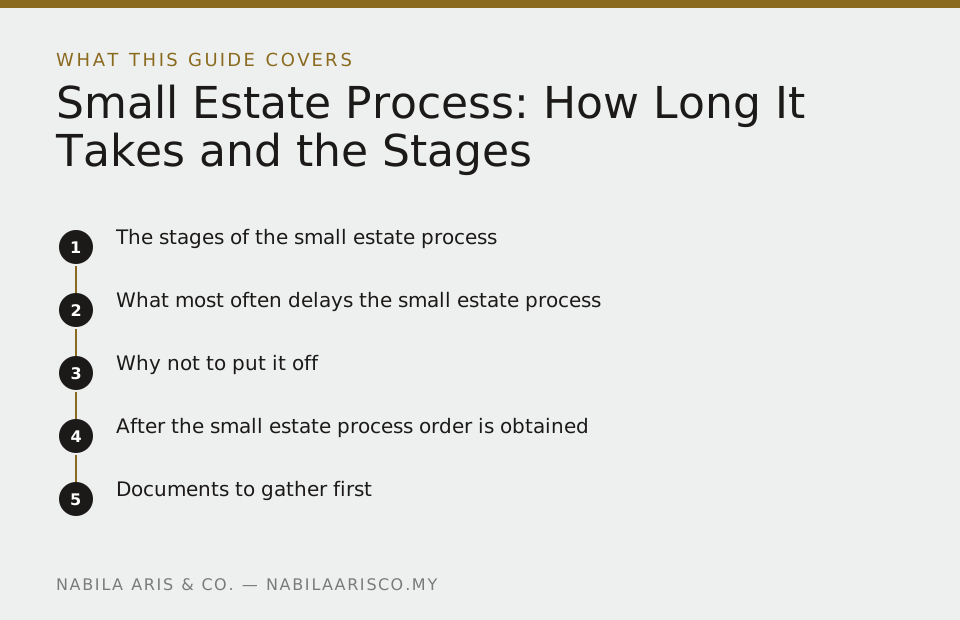
What this small estate process guide covers
A small estate is an administrative route rather than a full court proceeding. That is why it is usually faster and cheaper. But faster here means relative to probate, not finished in a few weeks.
The stages of the small estate process
- Gather documents. Death certificate, identity documents of the deceased and beneficiaries, the title, and proof of family relationships.
- Searches and verification. Official title search to confirm the state of the property, charges and caveats.
- Identify beneficiaries. Establishing who is entitled under the law applicable to the deceased.
- File the application. The application form and supporting documents are submitted.
- Notice and hearing. All beneficiaries are given notice. A hearing is held to determine the distribution.
- Distribution order. The order is issued setting out how the estate is divided.
- Registration. The transfer to the beneficiaries is registered at the land office. Only then does the title change name.
What most often delays the small estate process
- Beneficiaries who cannot be traced, are overseas, or will not engage
- Beneficiaries who do not agree with the proposed distribution
- The original title is lost and has to be replaced first
- Incomplete death certificates or identity documents
- A beneficiary who died after the deceased, creating an overlapping estate
- Property spread across several districts or states
Why not to put it off
Every year that passes adds difficulty. Beneficiaries die and add a further layer of estate. Documents go missing. Family members move and contact is lost. A case that would have been straightforward five years after death can be complicated fifteen years later.
After the small estate process order is obtained
The distribution order does not by itself change the name on the title. The transfer still has to be registered. If the beneficiaries later want to sell, that sale is a separate matter with the usual conveyancing costs and gains tax considerations.
| Holding period | Citizen & PR | Company | Non-citizen |
|---|---|---|---|
| Year one | 30% | 30% | 30% |
| Year two | 30% | 30% | 30% |
| Year three | 30% | 30% | 30% |
| Year four | 20% | 20% | 30% |
| Year five | 15% | 15% | 30% |
| Year six and beyond | 0% | 10% | 10% |
Documents to gather first
The death certificate, the deceased’s identity card, and a copy of the title are the basics. Add birth or marriage certificates for each beneficiary to show the relationship to the deceased.
If the deceased had more than one marriage, or if there are adopted or stepchildren, further documents are needed to make each person’s position clear.
Gather the quit rent and assessment position as well. Arrears have to be cleared before the transfer can be registered, and knowing early lets the family plan.
What happens on the hearing day
The officer checks the documents, confirms the list of beneficiaries, and hears the proposed distribution. If every beneficiary attends and agrees, the order can often be made the same day.
If a beneficiary is absent without explanation, or if there is an objection, the hearing can be adjourned. Each adjournment adds months.
Once the order is made, a further step is needed to register the transfer at the land office. The order alone does not change the name on the title.
Costs to plan for
Beyond legal fees there are application fees, search costs, the cost of document copies, and attestation costs for beneficiaries abroad.
Quit rent and assessment arrears have to be cleared before the transfer is registered. For an estate left for many years, that amount can be substantial.
If the property has to be valued, that is a further cost. Check this early so the family can discuss who bears what.
For land left unclaimed for years, the timeline stretches further still. We set out why in unclaimed inherited land.
Where the beneficiaries do not all agree, or one of them cannot be traced, the timeline changes again. We set out what happens in beneficiaries who disagree.
Frequently asked questions about small estate process
Do all beneficiaries have to agree?
You have to identify every entitled beneficiary and give them notice. An objection does not automatically stop the process, but it makes it longer and more complicated.
What if the original title is lost?
A replacement title has to be applied for before the transfer can be registered. This adds a step and time, so it is better found early.
Can I start before all documents are complete?
A lawyer can start reviewing and identifying what is missing, but the application itself needs the basic documents in place.
What if a beneficiary dies during the process?
It creates a further estate that also has to be resolved. This is the main reason delay of many years raises both cost and time.
Ready to start your property matter?
An initial consultation with no obligation. Tell us about your matter and we will explain what is involved and what it is likely to cost.
No 1, Jalan Setia Dagang AL U13/AL, Setia Alam, 40170 Shah Alam, Selangor
014-4004293 · Monday to Friday, 9:00am to 5:00pm