Property Problems and Red Flags
Situations that should make you stop and get advice before you sign anything or pay anything. What is happening, why it is risky, and what your options are.
Updated 3 September 2026 · Written and reviewed by Nur Nabilah Binti Mohd Aris

Property problems and red flags usually show up early, in the documents and in the title search. Property problems and red flags almost always show up before money changes hands. The three most expensive: paying a deposit before a title search is done, signing a developer booking form without reading the cancellation terms, and buying property still registered in a deceased owner's name. All three are detectable before money changes hands.
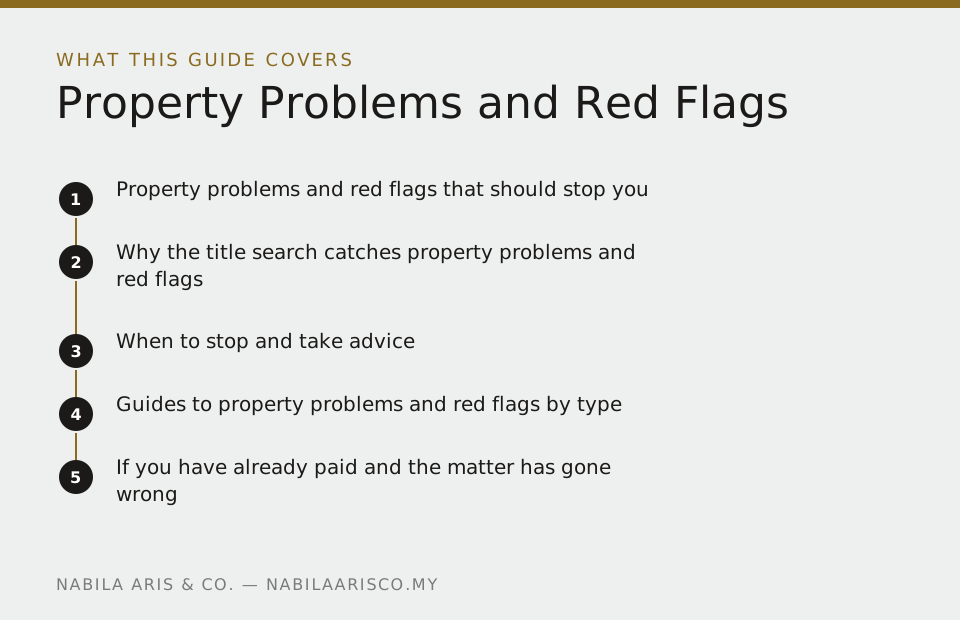
What this property problems and red flags guide covers
Most of the property problems that reach our desk were avoidable. Not because people were careless, but because they did not know what to check before signing.
This page sets out the situations that most often lead to loss, and what to do when you come across one.
Property problems and red flags that should stop you
- Asked to pay a substantial deposit before any search is done. An official title search reveals charges, caveats and restrictions in interest. It should happen before money changes hands, not after.
- Asked to pay the seller directly rather than a stakeholder. A deposit should be held as stakeholder money and released only when the conditions are met.
- The name on the title is not the name of the person selling. This can mean the property is still in a deceased owner’s name, or that the seller is acting as an agent without proper authority.
- There is a caveat on the title. A caveat blocks registration. It has to be removed before the transfer can be registered.
- The title carries a restriction in interest. The transfer will require State Authority consent, which takes time and is not guaranteed.
- You are pressed to sign the same day. Time pressure is the most common way people are made to skip checks.
Why the title search catches property problems and red flags
An official title search shows who the registered proprietor is, whether there is an undischarged charge, whether a caveat has been entered, and whether a restriction in interest limits dealings. One search before signing can save months of trouble.
Caveats are entered under the National Land Code 1965 and operate to prevent registration of dealings until removed. If you buy a property carrying a caveat without resolving it first, you may be unable to register the transfer even after paying in full.
When to stop and take advice
Take advice before, not after, if any of these apply:
- The registered proprietor has died and the estate has not been resolved
- The seller is acting through a power of attorney
- The property is being sold below market value for reasons that are not clear
- The purchase involves a Bumiputera reserve lot and the buyer is not Bumiputera
- You have already paid and the matter has stalled with no explanation
- The other side will not give you a copy of the title or details of the registered proprietor
Guides to property problems and red flags by type
The patterns that repeat
Property problems rarely appear out of nowhere. There are almost always early signs that get ignored because the buyer does not want to lose a property they like.
The first sign is pressure to pay quickly. An agent or seller pushing for earnest money before any search is run is the pattern that most often ends in loss.
The second is incomplete documents with an explanation attached. A grant that cannot be produced, or a blurred copy, should be resolved before money changes hands.
The third is a story that shifts. If the account of who owns the property or why it is being sold changes between conversations, stop and check.
If you have already paid and the matter has gone wrong
Your options depend on what the agreement says and how far the matter has progressed. Sometimes the answer lies in the termination terms of the agreement itself. Sometimes it starts with protecting your interest on the title by entering a caveat.
Gather every document now: the agreement, receipts, messages and records of transfers. Do not rely on memory, and do not delete messages. Receipts, WhatsApp messages and booking forms all help work out where you stand, even when the set is incomplete.
Get an official title search so that the actual position is known rather than the stated one.
A caveat needs a proper basis, so take advice before filing.
Frequently asked questions about property problems and red flags
Can I enter a caveat to protect my interest?
A caveat may be entered by a party holding a caveatable interest in the land under the National Land Code 1965. Whether you qualify depends on your position in the transaction. This needs to be assessed against your documents.
What happens if the seller dies during the transaction?
The matter cannot proceed until a proper personal representative is appointed for the estate. Depending on the value and type of assets, the route is either small estate distribution, letters of administration, or a grant of probate.
Can I get my deposit back if I cancel?
It depends entirely on the terms of the agreement or booking form. Some developer booking forms provide that the deposit is non-refundable. Read it before signing, not after.
I bought a house but the title is still in someone else's name. What should I do?
Gather every document you have and take advice promptly. The cause and the remedy differ depending on whether it is an estate issue, a caveat, a restriction in interest, or a dealing that was never registered.
Ready to start your property matter?
An initial consultation with no obligation. Tell us about your matter and we will explain what is involved and what it is likely to cost.
No 1, Jalan Setia Dagang AL U13/AL, Setia Alam, 40170 Shah Alam, Selangor
014-4004293 · Monday to Friday, 9:00am to 5:00pm