Drafting a Will
Preparing a valid and clear will, choosing the right executor, and making sure it can be carried out without a dispute.

Drafting a will decides who administers your estate and, for non-Muslims, who receives what. A will decides who administers your estate and, for non-Muslims, who receives what. It does not remove the need for probate. For Muslims, limits apply to a will, and faraid governs the balance of the estate.
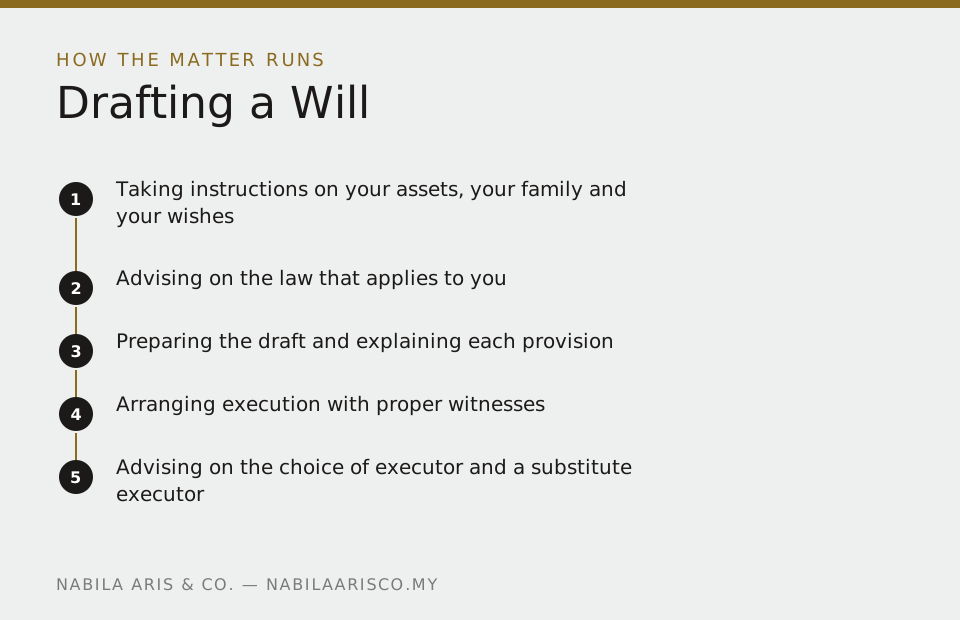
The drafting a will process step by step
A will is not a document for the old or the wealthy. It is a document for anyone who would rather their family did not have to guess what they wanted.
What drafting a will actually does
A will names an executor, the person who will administer your estate. For non-Muslims it also decides who receives what. It does not remove the probate application: the executor must still apply to court before acting.
Drafting a will for Muslims
A Muslim will works differently. Set limits apply, and faraid governs the balance of the estate. Families who want to give more to a particular person usually need to consider lifetime instruments rather than relying on a will alone.
Choosing an executor when drafting a will
The choice of executor matters more than people expect. They need to be young enough to still be able to act later, willing to take the work on, and able to deal with the other beneficiaries without conflict. Name a substitute in case your first choice cannot act.
Mistakes in drafting a will that make it useless
- A will that cannot be found after the death
- Provisions vague enough to be read two ways
- Assets named in it that have since been sold or changed
- An old will never updated after a major change in the family
- An executor who was never told they had been named
What to prepare before seeing a solicitor
A list of assets and liabilities is the starting point. Property with title particulars, bank accounts, investments, insurance policies, and outstanding loans. A will drafted without a full list usually leaves something out.
Prepare full details of the beneficiaries too: names as they appear on identity cards, the relationship, and how to reach them. A family nickname is not sufficient identification for a legal document.
Think about a substitute executor. The first choice may die before you, or decline to act when the time comes, and a will without a substitute leads to a further court application.
Storing and updating a will
Keep the original somewhere safe but accessible. A bank safe deposit box that can only be opened with a grant of probate is the classic problem, because the grant itself requires the original will.
Tell the executor where the will is kept. A will nobody can find has the same effect as no will at all.
Review it after a marriage, a divorce, the birth of a child, or a significant property purchase. For non-Muslims, marriage can revoke an earlier will, and many people do not realise it.
Where a will is not enough on its own
A will decides who receives what. It does not avoid the need for a court application, and it does not move a property into someone’s name by itself.
If you want speed, other arrangements can sit alongside a will: a lifetime transfer, or a nomination under certain instruments. Each has different costs and different tax effects.
Discuss the combination with a solicitor before signing anything. A will prepared in isolation often leaves the family with more work than the testator intended.
The conditions for a valid will, including witnesses and the effect of marriage, are set out in the Wills Act 1959.
What your lawyer handles
- Taking instructions on your assets, your family and your wishes
- Advising on the law that applies to you
- Preparing the draft and explaining each provision
- Arranging execution with proper witnesses
- Advising on the choice of executor and a substitute executor
- Keeping a copy and advising on safe storage
Documents you need to prepare
- Copy of identity card
- A list of assets: property, bank accounts, shares, insurance policies, EPF
- Details of family members and intended beneficiaries
- Details of the proposed executor
- Copies of property titles, if any
Costs people often overlook
- Legal fees for preparing the will
- Witnessing and attestation costs where applicable
- Service tax of 8% on legal fees
When to stop and get advice first
- A will stored where nobody knows to look
- An executor who has since died or does not want to act
- An old will never updated after a marriage, divorce or property purchase
- Provisions so unclear a reader could take them two ways
- Assuming a will disposes of a matrimonial property claim
Frequently asked questions about drafting a will
Does a will have to be registered?
Not for validity, but someone does have to find it. A will nobody can locate helps no one.
Can I write my own will?
You can, but an unclear will, or one that does not meet the formal requirements, can produce a dispute that is expensive to resolve later.
Are there limits on a Muslim will?
Yes. Set limits apply to a Muslim will, and faraid governs the balance of the estate.
Can I change it later?
Yes. You can amend or replace a will for as long as you have capacity.
Who should be the executor?
Someone you trust, young enough to still be able to act later, and willing to take the work on. Name a substitute as well.
Ready to start your property matter?
An initial consultation with no obligation. Tell us about your matter and we will explain what is involved and what it is likely to cost.
No 1, Jalan Setia Dagang AL U13/AL, Setia Alam, 40170 Shah Alam, Selangor
014-4004293 · Monday to Friday, 9:00am to 5:00pm