Property Matter Process and Timeline in Malaysia
How long each property matter takes, what happens at every stage, and the things that most often cause delay.
Updated 1 September 2026 · Written and reviewed by Nur Nabilah Binti Mohd Aris

The property matter process in Malaysia follows a fixed set of stages. A standard subsale takes three to four months from the date the sale and purchase agreement is signed to the title being registered in the buyer's name. Freehold property with no restriction moves fastest. Leasehold property, property needing State Authority consent, and property still registered in a deceased owner's name take longer.
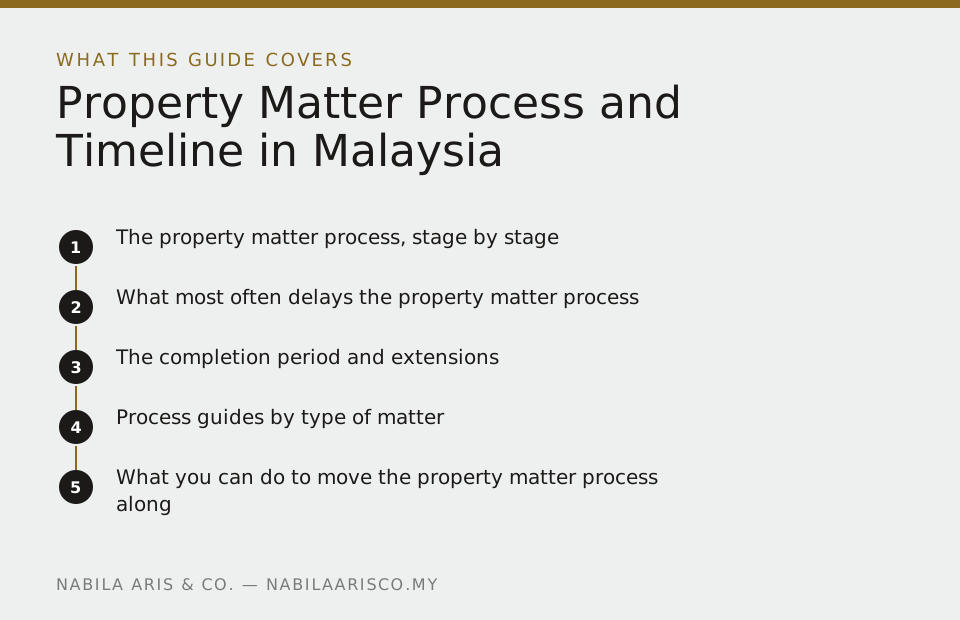
What this property matter process guide covers
After cost, the most common question is time. How long until the title changes hands, how long until the seller receives the balance, and when the keys can be handed over.
The answer turns on three things: the type of title, whether there is a loan, and whether anything has to be cleared first. This page sets out each stage and shows where the time is actually lost.
The property matter process, stage by stage
A subsale moves through a predictable set of stages. What varies is how long each one takes.
- Before signing. Official title search, checking for restrictions in interest, checking existing charges and caveats. This is the most important stage and the one most often cut short.
- Signing the sale and purchase agreement. The deposit is paid and held as stakeholder money. The completion period runs from this date.
- Loan documentation. The letter of offer is accepted, loan documents are signed, the charge is prepared. This stage usually sets the pace of the whole matter.
- Stamping. The transfer instrument and loan documents are submitted for adjudication and stamping.
- Registration. The transfer and the charge are registered at the land office. The title changes into the buyer’s name at this stage.
- Completion. The balance purchase price is released to the seller, the existing charge is discharged, and keys are handed over.
What most often delays the property matter process
In our experience delay rarely comes from the land office. It comes from things that should have been picked up before signing.
- The seller’s existing charge taking time for the bank to discharge
- A restriction in interest on the title requiring State Authority consent
- The property still registered in a deceased owner’s name, so the estate has to be resolved first
- A caveat entered by a third party that has to be removed
- Loan documents issued late by the bank, or the buyer returning signed documents late
- An official valuation higher than the purchase price, raising the stamp duty and leaving the buyer to find the difference
The completion period and extensions
A sale and purchase agreement normally provides for a base completion period, with an extended period that carries late interest. These dates matter: if the buyer fails to complete within the agreed period, the seller may be entitled to terminate and forfeit the deposit, depending on the terms of the agreement.
If you can see your matter running late, tell your lawyer early. An extension requested before the date expires is far easier to arrange than one asked for afterwards.
Process guides by type of matter
Each type of matter has its own timeline and its own choke points.
What you can do to move the property matter process along
Most of the timeline is outside your control, but a few things genuinely help:
- Have identity documents, bank statements, payslips and loan papers ready before they are asked for
- Reply to your lawyer and your bank the same day, especially for documents that need signing
- Do not leave EPF withdrawals or top-up funds until close to the completion date
- If the property is leasehold or carries a restriction in interest, start the consent application as early as possible
Who holds the ball at each stage
Knowing who is acting explains why a stage is slow. After the sale and purchase agreement is signed, the ball is with the bank for valuation and the letter of offer.
Once the offer is accepted, it passes to the solicitors for loan documentation and stamping. After stamping, it sits with the land office for registration.
At completion it goes back to the bank to release funds. If you know which stage is running, you know where to direct your question.
What you can control
You cannot speed up the land office, but you can make sure your own documents are not the cause of delay. Identity cards, bank statements, payslips and bank forms should go in complete the first time.
You can also avoid delay by agreeing a realistic completion period at the start, and by not switching banks midway.
One more: reply to your solicitor. Matters held up waiting for a single confirmation from the client are more common than people think.
Frequently asked questions about property matter process
When do I get the keys?
Keys are normally handed over at completion, after the balance purchase price is released to the seller and the existing charge is discharged. It is not on the date the sale and purchase agreement is signed.
Why has the title not changed hands even though I have paid?
A transfer only takes effect once it is registered at the land office. Between payment and registration there are stamping and lodgement stages that take time.
What happens if I cannot complete within the period?
It depends on the terms of the agreement. There is usually an extended period carrying late interest. If the extended period also expires, the seller may be entitled to terminate. Speak to your lawyer before the date expires, not after.
Does leasehold take longer than freehold?
Usually yes, because a transfer of leasehold property often requires State Authority consent before it can be registered.
Ready to start your property matter?
An initial consultation with no obligation. Tell us about your matter and we will explain what is involved and what it is likely to cost.
No 1, Jalan Setia Dagang AL U13/AL, Setia Alam, 40170 Shah Alam, Selangor
014-4004293 · Monday to Friday, 9:00am to 5:00pm