Discharge of Charge
Releasing the bank charge over your property after the loan has been settled in full, and registering that discharge at the land office so your title is clean.

A discharge of charge is the instrument that removes the bank charge from your title once you settle the loan. After you settle your housing loan in full, the bank charge stays on your title until someone files and registers a discharge instrument at the land office. Until then your property is not free of encumbrance, which will hold up a sale or a refinancing.
The discharge of charge process step by step
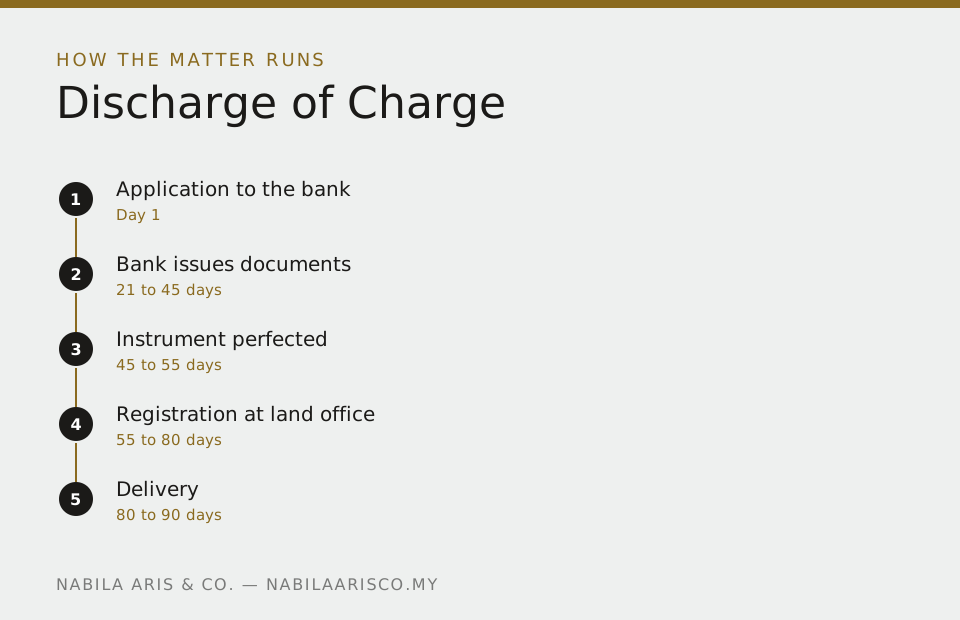
Settling your housing loan does not automatically clear your title. The charge registered at the land office stays there until a discharge instrument is filed and registered.
Many owners only discover this years later, when they try to sell and a land search shows the charge still in place.
When a discharge of charge should be done
As soon as the loan is settled in full. There is no benefit in delaying, and delay only adds risk: banks merge or change names, documents become harder to trace, or a registered proprietor dies before the matter is dealt with.
Documents from the bank for a discharge of charge
The bank has to issue a full settlement confirmation, a signed discharge instrument, and the original title held in its custody. The time taken to issue these is the part of the process that most often takes longest, and it is outside the control of the solicitors.
Why most owners only find out when they sell
Banks do not register a discharge of charge automatically once a loan is settled. Most banks simply issue a settlement confirmation letter and return the title document. The charge entry stays on the title until the discharge instrument is filed and registered at the land office.
As a result many owners only discover the position years later, when a title search is run for a sale. By then the sale has to wait, and an impatient buyer sometimes walks away.
Run a search on your own title now if the loan was settled more than a year ago. An official search is a small cost against a delayed sale.
What delays a discharge of charge
The first cause is the bank’s own paperwork. Some banks take time to issue a properly executed discharge instrument, particularly where the loan is old or where the bank has since merged with another.
The second is a missing title document. If the original grant cannot be traced, an application for a replacement title has to be made first, and that adds several months.
The third is outstanding quit rent. The land office will not register a dealing while quit rent is in arrears. Check and clear the arrears before filing, not after the filing is rejected.
Cost and a reasonable timeline
A discharge of charge involves legal fees, stamp duty on the discharge instrument, and the land office registration fee. The total is far smaller than a sale, but it still has to be planned for.
Timing depends mostly on how quickly the bank issues its documents. With complete bank paperwork, registration at the land office usually takes a few weeks. Where the grant is missing or the bank has since merged, expect longer.
Deal with the discharge as soon as the loan is settled, not when you already have an offer from a buyer. At that point every week of delay is a risk to the sale.
What your lawyer handles
- Requesting the full settlement confirmation and discharge instrument from the bank
- Checking whether individual title has issued, since this determines the form of release required
- Preparing and perfecting the discharge instrument
- Presenting the discharge for registration at the land office
- Retrieving the original title from the bank's custody
- Delivering the clean title to you
Timeline
Documents you need to prepare
- Copy of the identity card of every registered proprietor
- Full settlement confirmation from the bank
- Copy of the title
- Copy of the original charge document if you have it
Costs people often overlook
- Legal fees for preparing and registering the discharge
- Land office fee for registration of the discharge
- Administrative charges from the bank for issuing the discharge documents
- Service tax of 8% on legal fees
When to stop and get advice first
- The bank cannot trace the original title, so you need a replacement of lost title first
- The name of the registered proprietor differs from the name on the current identity card
- One of the registered proprietors has died
- The charge favours a bank that has since merged or changed its name, so you need extra supporting documents
Frequently asked questions about discharge of charge
I have paid off the loan, why do I still need a discharge?
Settlement of the loan and discharge of the charge are two separate things. Until the land office registers the discharge, the register still shows your property as encumbered.
What happens if I do not do it?
You cannot sell or charge the property again until the land office discharges the charge. It can also complicate an estate matter later.
How long does it take?
Usually one to three months, depending mainly on how quickly the bank issues the discharge documents and the original title.
Can I do it myself without a lawyer?
The discharge instrument has to meet the land office's requirements before registration. Errors in the instrument lead to rejection and delay.
My title is lost, can I still discharge?
You have to replace a lost title first through a replacement of title application. That is a separate matter which takes additional time.
Ready to start your property matter?
An initial consultation with no obligation. Tell us about your matter and we will explain what is involved and what it is likely to cost.
No 1, Jalan Setia Dagang AL U13/AL, Setia Alam, 40170 Shah Alam, Selangor
014-4004293 · Monday to Friday, 9:00am to 5:00pm