Cost of a Small Estate Distribution
What makes up the cost of a small estate distribution application, and what drives the final figure.
Updated 1 September 2026 · Written and reviewed by Nur Nabilah Binti Mohd Aris

Small estate distribution cost is lower than probate because the matter is handled by the Estate Distribution Unit. A small estate is handled by the Estate Distribution Section under the Small Estates (Distribution) Act 1955, not through the courts. The main costs are the legal fee for preparation and representation, plus official fees and searches. The total depends on the number of beneficiaries, whether they all agree, and how many documents are missing and have to be replaced.
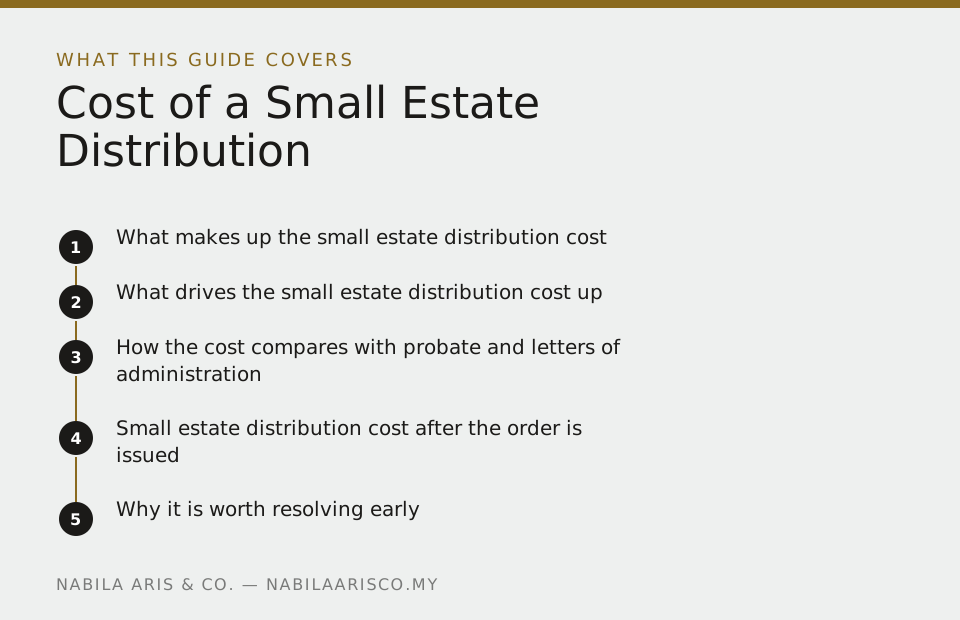
What this small estate distribution cost guide covers
A small estate distribution is the simpler and cheaper route to distributing an estate, but it only applies where the estate meets the conditions set out in the Small Estates (Distribution) Act 1955. If it does not qualify, the route shifts to letters of administration or a grant of probate through the courts, which cost differently.
What makes up the small estate distribution cost
Unlike conveyancing, there is no single percentage scale that sets the whole cost of a small estate. The cost is built from several components:
- Legal fees. For reviewing documents, identifying the entitled beneficiaries, preparing the application, and representing the applicant at the hearing.
- Searches and verification. Official title search, confirming the state of the title, and checking for any charge or caveat over the property.
- Official fees. Application and related fees charged by the authority.
- Registration costs. Once the distribution order is issued, the transfer to the beneficiaries still has to be registered at the land office.
- Document replacement. If the original title is lost or death certificates are incomplete, there is an additional cost to replace them.
What drives the small estate distribution cost up
Three things most often push the cost well beyond the initial estimate:
- Beneficiaries who do not agree. If everyone agrees on how the estate is to be divided, the matter moves quickly. If there is an objection, it becomes a longer matter.
- Beneficiaries who cannot be traced or are overseas. Every beneficiary has to be identified and given notice.
- A beneficiary who has died after the deceased. This creates an overlapping estate that has to be resolved at the same time.
How the cost compares with probate and letters of administration
A small estate is usually the cheapest route because it is handled administratively rather than through full court proceedings. Probate and letters of administration involve court filings and, in the case of letters of administration, sometimes a surety bond requirement. The probate and letters of administration cost guide explains the difference.
Small estate distribution cost after the order is issued
The distribution order by itself does not change the name on the title. Once the order is obtained, the transfer to the beneficiaries still has to be registered at the land office, and that carries its own registration fee. Many people leave this step out when budgeting.
If the beneficiaries later want to sell the property, that sale is a separate matter with the usual conveyancing costs, and the seller has to account for real property gains tax.
| Holding period | Citizen & PR | Company | Non-citizen |
|---|---|---|---|
| Year one | 30% | 30% | 30% |
| Year two | 30% | 30% | 30% |
| Year three | 30% | 30% | 30% |
| Year four | 20% | 20% | 30% |
| Year five | 15% | 15% | 30% |
| Year six and beyond | 0% | 10% | 10% |
Why it is worth resolving early
Property that remains in a deceased owner’s name cannot be sold, charged or transferred. Every year that passes adds risk: beneficiaries die, documents are lost, and the number of parties who have to agree grows. Resolving an estate five years after death almost always costs less than resolving it fifteen years later.
What families usually do not expect
Legal fees are not the only cost. There are application fees, title search costs, the cost of obtaining copies of death and birth certificates, and the cost of attesting documents for beneficiaries who live overseas.
If the property has to be valued, that is another cost. If quit rent and assessment arrears have to be cleared before registration, that too has to be planned for.
Overall the small estate route remains cheaper than a High Court application, but the actual total depends on the number of beneficiaries and the state of the documents.
Why delay makes it more expensive
Every beneficiary who dies adds another estate that has to be resolved before the original distribution can proceed.
Tax arrears accumulate every year, and they have to be cleared before registration. Ten years of arrears is a cost that was entirely avoidable.
Documents also become harder to obtain. Birth certificates for beneficiaries born before modern registration take longer to verify, and each delay adds legal cost because more work is required.
Frequently asked questions about small estate distribution cost
What is the difference between a small estate and probate?
A small estate is handled administratively under the Small Estates (Distribution) Act 1955. Probate and letters of administration go through the courts. Which route applies depends on the type and value of the assets and whether there is a will.
Do all beneficiaries have to attend?
You have to identify every entitled beneficiary and give them notice. Whether they must attend in person depends on the circumstances and the directions of the authority.
How long does a small estate take?
It depends mainly on how complete the documents are and whether all beneficiaries agree. Cases with complete documents and agreement move far faster.
Can I sell the house before the estate is resolved?
No. While the property remains registered in the deceased's name, a transfer cannot be registered. The estate has to be resolved first.
Ready to start your property matter?
An initial consultation with no obligation. Tell us about your matter and we will explain what is involved and what it is likely to cost.
No 1, Jalan Setia Dagang AL U13/AL, Setia Alam, 40170 Shah Alam, Selangor
014-4004293 · Monday to Friday, 9:00am to 5:00pm