Small Estate Distribution
Applying for distribution of an estate through the Estate Distribution Unit, where the estate includes land and its value falls within the prescribed limit.

The Estate Distribution Unit handles small estate distribution, not the High Court. The Estate Distribution Unit under the Department of Director General of Lands and Mines handles a small estate, not the High Court. It applies where the estate includes immovable property such as land or a house and the total value falls within the prescribed limit. The process is simpler and the cost lower than a High Court application.
The small estate distribution process step by step
When a person dies leaving property, that property does not pass to the beneficiaries automatically. Ownership stays in the name of the deceased until the estate administration is completed and the transfer is registered.
Until then the property cannot be sold, cannot be charged, and cannot be transferred.
When the small estate distribution route applies
A small estate is dealt with by the Estate Distribution Unit and applies where the estate includes immovable property such as land or a house, and the total value of the estate falls within the prescribed limit.
The process is simpler and the cost lower than a High Court application. We check eligibility at the outset based on a complete schedule of assets.
Identifying beneficiaries in a small estate distribution
For Muslim families, beneficiaries are determined under faraid. For non-Muslims, they are determined under the Distribution Act 1958. In either case the list must be accurate, because notices are issued to all beneficiaries and an error at this stage delays the application.
The most common cause of delay in a small estate distribution
In our experience the delay is not with the authority but with gathering documents. A missing birth certificate, a beneficiary living overseas, or incomplete information about the deceased’s assets can add months.
The longer this is left after a death, the harder it becomes. Beneficiaries themselves can die, creating a chain of estates that is far more complicated.
What happens if it is put off for years
An unresolved estate does not disappear, but it becomes more complicated every year. Five beneficiaries can become fifteen once some of them die and their own estates have to be resolved.
Meanwhile the property cannot be sold, cannot be charged, and cannot be repaired using financing. Quit rent and assessment still fall due, and the accumulated arrears become a further burden on the family.
Documents also get harder to gather. Death certificates, birth certificates and identity cards of beneficiaries who have since died are much harder to obtain years later than in the year of death.
Consent of beneficiaries and what happens without it
A small estate application requires every beneficiary to be notified. If everyone agrees with the proposed distribution the process moves faster. If someone does not attend or does not agree, the hearing can be adjourned and the officer can order a distribution under the law.
A beneficiary who cannot be traced is not an absolute bar, but it calls for an extra step to show that a genuine search was made. Keep evidence of your attempts to contact them.
If one beneficiary wants to take over the shares of the others, that can be done, but it has to be stated clearly in the application rather than assumed from a verbal family understanding.
What your lawyer handles
- Checking whether the estate qualifies as a small estate or must go to the High Court
- Preparing a schedule of the assets and liabilities of the deceased
- Identifying all beneficiaries entitled under the applicable law
- Preparing the application form and supporting documents
- Filing the application with the Estate Distribution Unit
- Representing beneficiaries at the distribution hearing
- Attending to registration of the transfer once you obtain the distribution order
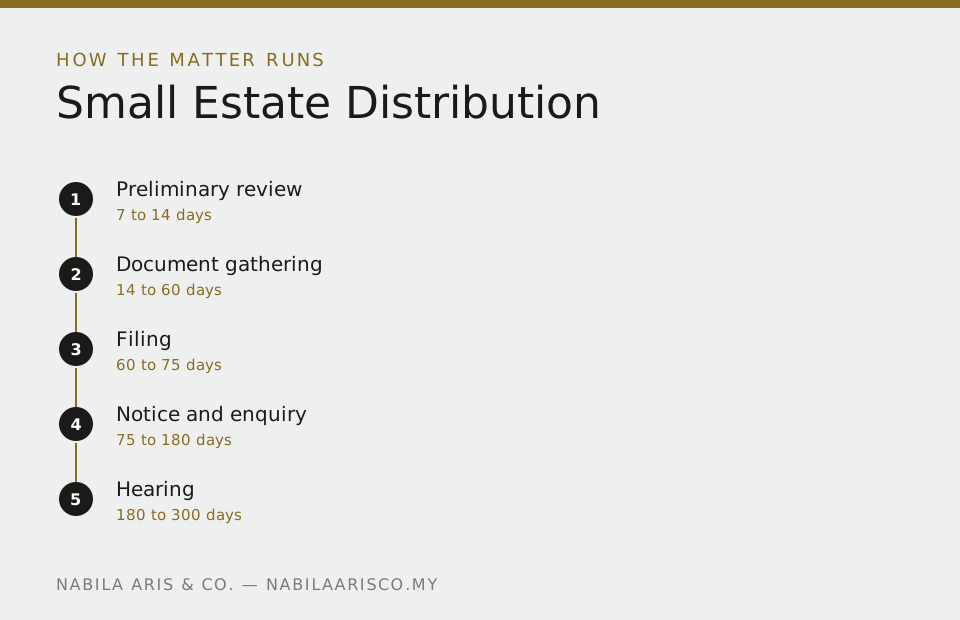
Timeline
Documents you need to prepare
- Death certificate of the deceased
- Copy of the identity card of the deceased
- Copy of the identity card of every beneficiary
- Birth certificates or marriage certificate to prove the relationship of beneficiaries
- Copy of the title and documents for other assets
- Bank statements, EPF statements and details of other assets
- Details of the debts of the deceased if any
Costs people often overlook
- Legal fees for the application and representation
- Filing fee at the Estate Distribution Unit
- Cost of asset searches and document certification
- Land office fee for registration of the transfer after the order
- Service tax of 8% on legal fees
When to stop and get advice first
- A beneficiary is uncontactable, or lives overseas
- There is a dispute among beneficiaries about the distribution
- The deceased left a will, which makes a probate application more appropriate
- The estate includes property in more than one state
- One of the beneficiaries has also died, creating a chain of estates
- The property still has an outstanding loan
Frequently asked questions about small estate distribution
What is the difference between a small estate and probate?
The Estate Distribution Unit handles a small estate where the estate includes land and the value falls within the prescribed limit. You apply for probate in the High Court where the deceased left a will.
How long does a small estate take?
Usually six to twelve months, depending on how complete the documents are, the number of beneficiaries, and whether there is a dispute.
Do all beneficiaries have to attend?
The unit issues notices to all beneficiaries. You must attend the hearing, or send someone to represent you. A beneficiary who cannot attend may send a representative with the appropriate documents.
Can we sell the deceased's house before the estate is settled?
Not until ownership passes to the beneficiaries through the distribution order and registration at the land office.
What if a beneficiary does not agree?
The Land Administrator will hear all parties. If the parties cannot resolve the dispute, the matter can go to court.
The house still has a loan, what happens?
The outstanding loan is a debt of the estate. Someone has to settle it, either through mortgage insurance if any exists, or from the estate.
There is MRTA insurance, does the loan clear automatically?
You have to make a claim to the insurer. It does not happen automatically and requires supporting documents.
Ready to start your property matter?
An initial consultation with no obligation. Tell us about your matter and we will explain what is involved and what it is likely to cost.
No 1, Jalan Setia Dagang AL U13/AL, Setia Alam, 40170 Shah Alam, Selangor
014-4004293 · Monday to Friday, 9:00am to 5:00pm