Entering a Caveat and How It Is Removed
What a caveat is under the National Land Code 1965, who can enter one, its effect on dealings, and how it is removed.
Updated 3 September 2026 · Written and reviewed by Nur Nabilah Binti Mohd Aris

Entering a caveat involves a prescribed form, a statutory declaration and registration at the land office. A caveat is an entry on the title that prevents registration of dealings until it is removed. It is entered by a party claiming a caveatable interest in the land under the National Land Code 1965.
What this entering a caveat guide covers
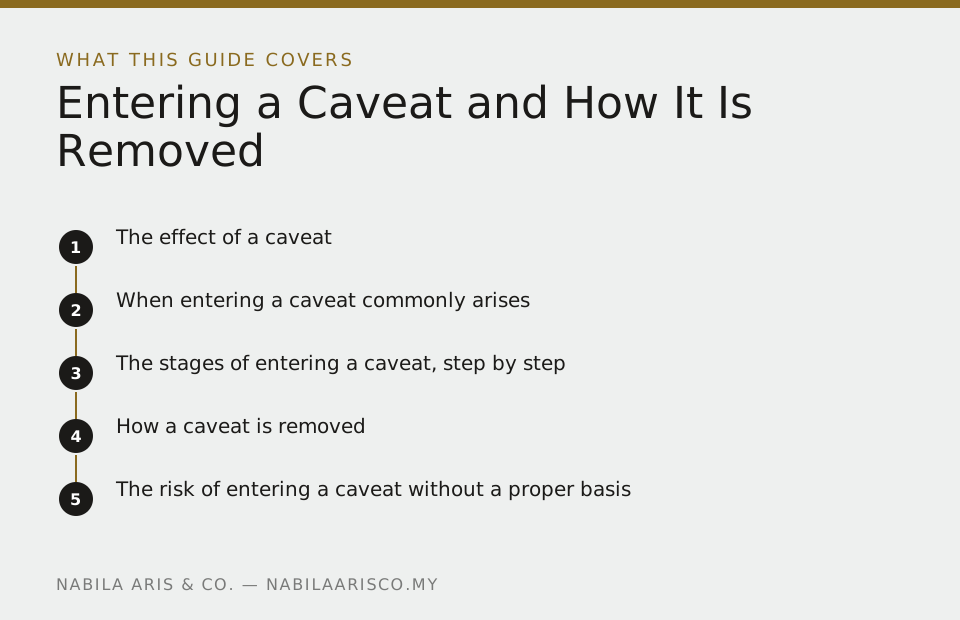
Caveats are often misunderstood as a way of stopping someone else from owning land. In fact they are a protective holding mechanism: they freeze registration so that a person’s interest is not lost while a dispute or transaction is resolved.
The effect of a caveat on the owner and the buyer
While a caveat exists, registration of dealings in that land is blocked. A transfer cannot be registered even where the full price has been paid. For a buyer this is a real risk: you may have paid and still be unable to become the registered proprietor.
The owner can still occupy and rent out the property, but cannot sell or charge it until the caveat is resolved. Banks will not approve financing on a property carrying a caveat either.
For a buyer who has already signed an agreement, a third-party caveat appearing later can derail the whole matter. That is why a title search before signing matters.
When entering a caveat commonly arises
- A buyer protecting an interest under a sale and purchase agreement
- Estate disputes between beneficiaries
- Matrimonial disputes involving property
- Creditors claiming an interest in the land
- Disputes between partners or trustees
The stages of entering a caveat, step by step
- Assess eligibility. Establishing whether you hold a caveatable interest. This is a legal assessment, not simply a sense of entitlement.
- Title search. Confirm the title particulars and the current registered proprietor.
- Prepare documents. The form and supporting affidavit setting out the basis of the interest.
- Entry. Documents are lodged at the land office and the caveat is entered on the title.
How a caveat is removed
- Voluntary withdrawal. The party who entered it withdraws, usually once the issue is resolved.
- Lapse. Some types of caveat have a limited period of validity.
- Application to remove. The registered proprietor applies for removal.
- Court order. Where the parties disagree, the issue goes to court to be decided.
The risk of entering a caveat without a proper basis
A caveat entered without a proper interest can expose the person who entered it to a claim for compensation from the party affected. It is not a pressure tactic. Before entering one, your position has to be properly assessed.
If you are the buyer and there is a third-party caveat
Do not continue paying until the position is clear. Money paid after a caveat is known about is far harder to recover.
Find out who entered it and on what basis. An official search will show this.
If beneficiaries entered it because the registered owner has died, the real issue is an unresolved estate rather than the caveat itself.
If an earlier buyer entered it after their agreement fell through, the resolution is usually a negotiation with that party.
Ask too whether the seller can resolve it within the completion period. This is one of the main reasons a title search belongs before signing, not after.
How long a caveat lasts and what follows
A private caveat does not last forever. It has a term, and it can lapse if it is not renewed or if it is not defended when challenged.
That means entering a caveat is not a final answer to the underlying claim. It is a protective step while the real issue is resolved.
Plan the next step from the outset: negotiation, a claim, or proceedings, depending on the circumstances. A caveat left without follow-up usually lapses, and the cost spent achieves nothing.
If your caveat is challenged
The party challenged has to show the basis of the interest within the period allowed.
The documents filed with the caveat become the basis of that argument, so the quality of the documents at the entry stage decides the outcome at this stage.
If you do not act within the period, the caveat lapses and you lose that protection.
Questions worth asking before filing
Whether I have a caveatable interest, and what the basis is.
What documents have to go with the statutory declaration.
What the risk is if the caveat is later challenged and removed.
What the next step is after the caveat is entered, and how long it can stay.
Frequently asked questions about entering a caveat
Can anyone enter a caveat?
No. The person entering it must hold a caveatable interest in the land. A caveat without basis can expose the person to a claim for compensation.
How long does a caveat last?
It depends on the type. Some have a limited period of validity, others remain until withdrawn or removed.
Does a caveat stop me living in my house?
No. A caveat blocks registration of dealings, not occupation. But it does stop you selling or charging the property.
How do I find out if there is a caveat?
Through an official title search. This is why the search belongs before you pay any deposit.
Ready to start your property matter?
An initial consultation with no obligation. Tell us about your matter and we will explain what is involved and what it is likely to cost.
No 1, Jalan Setia Dagang AL U13/AL, Setia Alam, 40170 Shah Alam, Selangor
014-4004293 · Monday to Friday, 9:00am to 5:00pm