Discharge of Charge After the Loan Is Settled
What to do once a housing loan is fully repaid, why the charge does not lapse on its own, and how long the discharge takes.
Updated 4 October 2026 · Written and reviewed by Nur Nabilah Binti Mohd Aris

The discharge of charge process starts with the bank redemption statement and ends with registration at the land office. A charge does not lapse automatically when the loan is repaid. It stays registered on the title until the discharge is registered at the land office. While it remains, you cannot sell or re-charge the property without dealing with it first.
What this discharge of charge process guide covers
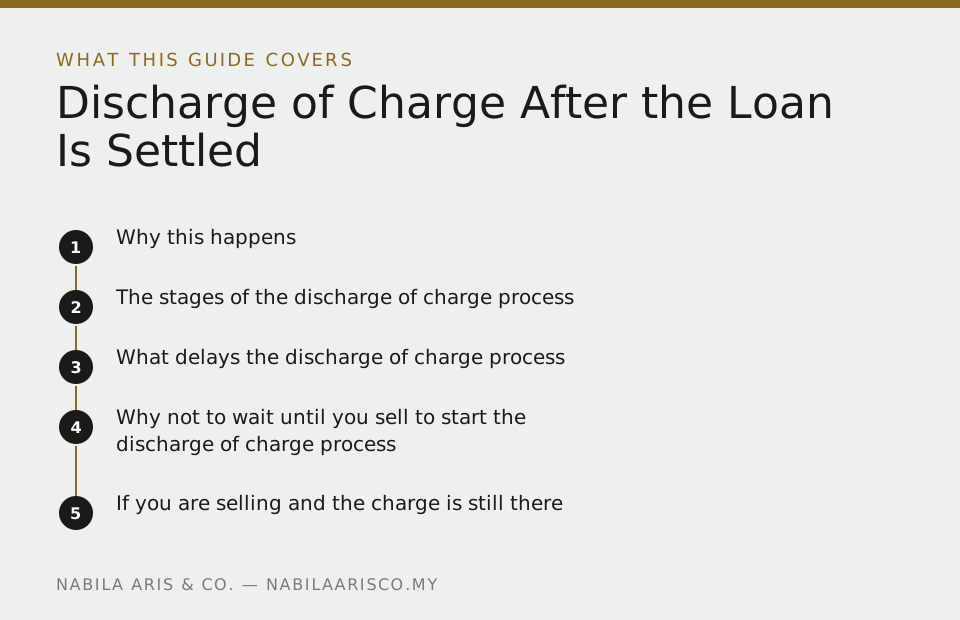
Many owners only discover this years later, usually when they try to sell. The loan was repaid long ago, but a title search still shows the bank’s charge registered against the property.
Why this happens
A charge is a registered interest on the title. Paying the debt discharges the obligation, but the entry on the title only comes off when the discharge instrument is prepared, stamped and registered. It is a separate step that someone has to start.
The stages of the discharge of charge process
- Confirm the loan status. Obtain written confirmation from the bank that the loan is fully settled.
- Title search. Confirm the charge is still registered and there is no caveat or other restriction.
- Discharge documents. The bank prepares and executes the discharge of charge.
- Original title. The bank returns the original title held throughout the loan.
- Stamping and registration. The discharge is stamped and registered at the land office.
- Confirmation search. A final search to confirm the charge no longer appears on the title.
What delays the discharge of charge process
- The bank taking time to issue the discharge documents
- The original title cannot be located in the bank’s custody
- The bank has merged or changed name, so records have to be traced
- Names or particulars on the title differ from the bank’s records
Why not to wait until you sell to start the discharge of charge process
Dealing with the discharge only when a buyer is waiting adds pressure to an already tight completion period. Handling it early means your title is clean and ready for any dealing.
If you are selling and the charge is still there
This is common and manageable. The seller’s bank issues a redemption statement, part of the purchase price is used to settle the outstanding loan, and the discharge is registered together with the transfer. What matters is coordination between the parties, and that takes time.
What the bank sends and what it does not
Once the loan is settled, most banks send a settlement confirmation letter and return the title document if they hold it. Some also send an executed discharge instrument.
What the bank does not do is file that instrument at the land office. Registration is a separate step that the owner or their solicitor has to take.
Keep everything received from the bank in one file. If the discharge instrument is lost, obtaining a fresh one usually takes months.
If the bank has merged or closed
Banks in Malaysia have been through several mergers. If your loan was taken from a bank that no longer exists under its original name, the discharge has to be issued by the successor bank.
That can take longer because old records have to be located. Start early, and have the original loan account number and a copy of the facility agreement ready if you have them.
If the records cannot be traced at all, an alternative route may be needed. This is rare, but it happens with very old loans.
Cost and who bears it
The cost of a discharge falls on the owner. It consists of legal fees, stamp duty on the discharge instrument, and the registration fee.
If you are selling, this cost is sometimes negotiated as part of the transaction, but by default it is the seller’s. Coordinating the discharge with the transfer is part of what a solicitor acting for the seller does.
Where a property carries more than one charge, each needs its own discharge instrument, and the cost multiplies.
Questions worth asking
Whether the charge is still registered on my title, and when it was registered.
Whether the bank has issued the discharge instrument, or whether it has to be requested.
Where my title document is now.
Whether there are quit rent arrears to clear first.
How long registration is expected to take.
If this discharge is part of a refinancing, the full cost is set out in refinancing costs.
Frequently asked questions about discharge of charge process
The bank says the loan is settled. Why is the charge still there?
Because the discharge is a separate registration step. Until the discharge is registered at the land office, the entry stays on the title.
Do I need a lawyer for a discharge?
A discharge involves preparing documents, stamping and registration. Most people use a lawyer because errors at this stage cause registration to be rejected.
How long does the bank take to return the title?
It varies by bank and whether the title is held at the branch or a central store. Start early rather than waiting until a buyer appears.
What if the bank has lost the original title?
A replacement title has to be applied for. This adds significant time, so it is better found before you put the property on the market.
Ready to start your property matter?
An initial consultation with no obligation. Tell us about your matter and we will explain what is involved and what it is likely to cost.
No 1, Jalan Setia Dagang AL U13/AL, Setia Alam, 40170 Shah Alam, Selangor
014-4004293 · Monday to Friday, 9:00am to 5:00pm