When Beneficiaries Disagree or Cannot Be Traced
What happens to an estate application when a beneficiary objects, cannot be contacted, or has died before the estate is resolved.
Updated 3 September 2026 · Written and reviewed by Nur Nabilah Binti Mohd Aris

Beneficiaries who disagree do not stop an estate, but they change the procedure and lengthen the timeline. Notice to every beneficiary is required. Where a beneficiary cannot be traced or does not agree, the application does not stop, but it takes longer and may have to be decided at a hearing.
What this beneficiaries who disagree guide covers
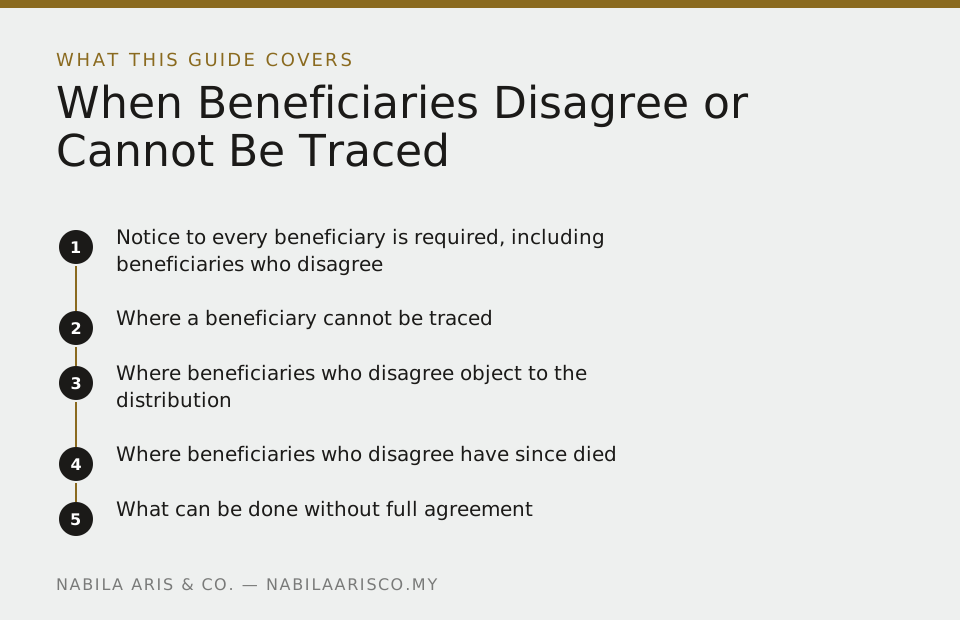
Estate matters rarely stall on the law. They stall on people: a beneficiary who cannot be reached, one who does not agree, or one who dies before the estate is resolved.
Notice to every beneficiary is required, including beneficiaries who disagree
Whether through a small estate or through the courts, every entitled beneficiary must be given notice. This is not a formality. A distribution order made without proper notice is exposed to challenge afterwards.
Where a beneficiary cannot be traced
The application does not necessarily stop. What changes is how notice is effected and what evidence of the search has to be produced. That adds time, and it is one reason estate matters run longer than families expect.
Show that reasonable efforts were made. Keep evidence of the attempts: messages, letters, and confirmation of the last known address.
If the beneficiary has been out of contact for a long time, further steps may be required, and this depends on the forum and the circumstances.
Do not assume someone has died without evidence. An assumption without documents will see the application returned.
An untraced beneficiary’s share is not divided among the others simply because they did not attend. It remains theirs unless otherwise provided.
Where beneficiaries who disagree object to the distribution
Disagreement is usually about who administers, whether the property should be sold or kept, or what the shares should be. These can be brought to a hearing and decided.
In many of the matters we see, the most practical resolution is a written agreement among the beneficiaries about what happens to the property after distribution, negotiated before the application is filed rather than after.
Where beneficiaries who disagree have since died
Their share passes into their own estate. A second estate then has to be resolved before the first distribution can be completed.
Further documents are needed: that beneficiary’s death certificate, and details of their own beneficiaries.
This is the main reason delay is expensive. Each further death adds another application, another set of documents, and another set of beneficiaries to identify.
What can be done without full agreement
An application can proceed even where not every beneficiary agrees. Notice is required; consent is not. The officer or the court hears any objection and decides.
A reasonable objection, such as a dispute over who the lawful beneficiaries are, will be examined. An objection that amounts to dissatisfaction with the share usually does not change a distribution fixed by law.
What matters is that each beneficiary is genuinely notified and that a record of the notice is kept.
What helps the matter move
One person appointed as the main point of contact to collect documents from everyone.
One complete list of beneficiaries, checked together before the application is filed rather than after.
And a family discussion about the proposed distribution before the hearing. Discussions that happen for the first time in front of the officer almost always end in an adjournment.
Questions worth asking
Whether every beneficiary has been identified and notified.
What has to be shown for a beneficiary who cannot be traced.
What effect an objection has on the timeline and the cost.
Whether the proposed distribution follows the law or a family agreement.
What happens if a beneficiary dies before the distribution is complete.
Where a beneficiary is overseas
Consent can be given from abroad, but the documents have to be attested in an accepted form.
Start collecting those documents as early as possible. Waiting on a single signature from overseas is a common cause of delay.
And make sure current addresses and contact details are recorded, so that notice actually reaches them.
Frequently asked questions about beneficiaries who disagree
Can we proceed without one beneficiary?
Notice still has to be given. What changes is how notice is effected and whether the issue has to be decided at the hearing.
A beneficiary is overseas. Do they have to come back?
Not necessarily. Documents can be arranged from abroad with the appropriate attestation, but it adds time.
One beneficiary has died. What happens to their share?
It passes into their own estate. A second estate then has to be resolved, which is exactly why delay makes these matters harder.
Ready to start your property matter?
An initial consultation with no obligation. Tell us about your matter and we will explain what is involved and what it is likely to cost.
No 1, Jalan Setia Dagang AL U13/AL, Setia Alam, 40170 Shah Alam, Selangor
014-4004293 · Monday to Friday, 9:00am to 5:00pm