Property Still in a Deceased Owner’s Name
Why property in a deceased owner's name cannot be sold or charged, which route applies, and why delay makes it more expensive.
Updated 4 September 2026 · Written and reviewed by Nur Nabilah Binti Mohd Aris

Property in a deceased name cannot be sold or charged until the estate is resolved and the title is transferred. Property still registered in a deceased owner's name cannot be sold, charged or transferred until the estate is resolved and the transfer to the beneficiaries is registered. The route is either a small estate, letters of administration, or probate, depending on the circumstances.
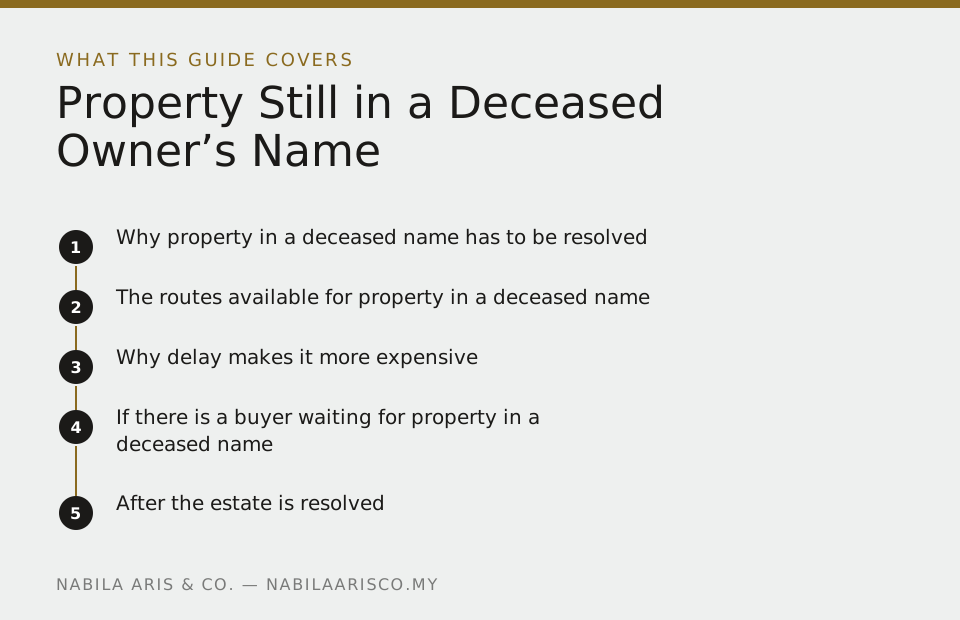
What this property in a deceased name guide covers
This is one of the most common property problems in Malaysia, and one of the most frequently postponed. The family carries on living in the house, so it never feels urgent, until it is time to sell or one of the beneficiaries dies.
Why property in a deceased name has to be resolved
Death does not transfer title automatically. Until the transfer to the beneficiaries is registered, the property remains in the deceased’s name on the land office record. The consequences:
- It cannot be sold, because the registered proprietor cannot sign anything
- It cannot be charged as security for a loan
- It cannot be transferred to anyone
- It is difficult to deal with when quit rent, assessment or maintenance issues arise
The routes available for property in a deceased name
- Small estate. Through the Estate Distribution Section under the Small Estates (Distribution) Act 1955, where the estate meets the prescribed conditions.
- Letters of administration. Through the courts where there is no will and the estate does not qualify as a small estate.
- Probate. Through the courts where there is a valid will.
Determining the correct route is the first step, because filing in the wrong place wastes both time and cost.
Why delay makes it more expensive
- Beneficiaries die, creating overlapping estates that have to be resolved together
- The number of parties who must agree grows with each generation
- Documents are lost: the original title, death certificates, identity documents
- Family members move, emigrate, or lose contact
- Quit rent and assessment accumulate
If there is a buyer waiting for property in a deceased name
Property still in a deceased owner’s name cannot be sold. The estate has to be resolved and the title transferred to the beneficiaries first.
If a buyer has already been found, do not sign a sale and purchase agreement before the estate position is clear. An agreement that cannot be completed exposes the seller to a claim.
The safer option is to tell the buyer the actual position and negotiate a realistic period, including what happens if the process takes longer than expected.
Buyers told early are usually far more willing to wait than buyers who find out through a title search.
What to gather
- The deceased’s death certificate
- The title or a recent copy
- Identity documents of the deceased and all beneficiaries
- Marriage and birth certificates to establish relationships
- The will, if there is one
- Details of other estate assets and debts
If the deceased had more than one marriage, or if a beneficiary has since died, further documents are needed for each of those situations.
Gather the tax arrears position too. Arrears have to be cleared before the transfer can be registered, and knowing the amount early lets the family discuss who pays.
After the estate is resolved
Once the order or grant is obtained, a further step is needed to register the transfer from the deceased’s name into the beneficiaries’ names at the land office. We set out the stages in the title transfer process, by reason.
Only after that registration is complete can the property be sold, charged or transferred in the ordinary way.
If the beneficiaries later sell, that sale is a separate matter with the usual conveyancing costs. The seller also has to account for real property gains tax. The holding period is worked out under the rules that apply to estate property.
| Holding period | Citizen & PR | Company | Non-citizen |
|---|---|---|---|
| Year one | 30% | 30% | 30% |
| Year two | 30% | 30% | 30% |
| Year three | 30% | 30% | 30% |
| Year four | 20% | 20% | 30% |
| Year five | 15% | 15% | 30% |
| Year six and beyond | 0% | 10% | 10% |
Questions worth asking
Which route applies to this estate, and why.
Who the lawful beneficiaries are, and what documents prove it.
How much tax arrears has to be cleared before the transfer can be registered.
How long the whole process is expected to take.
What I should tell a buyer who is waiting.
Where the estate has been left for years, the cost changes entirely. We set out why in unclaimed inherited land.
Frequently asked questions about property in a deceased name
We have lived in the house for years. Is that enough?
No. Occupation is not registered ownership. While the title is in the deceased's name, the property cannot be dealt with.
Can we sell first and resolve the estate later?
No. A transfer cannot be registered until there is a proper registered owner able to sign.
One beneficiary will not cooperate. What can be done?
The process can still proceed, but it becomes longer. Beneficiaries have to be given notice and objections dealt with under the procedure.
The original title is lost. Can we still proceed?
A replacement title has to be applied for first. This adds time, so it is better found as early as possible.
Ready to start your property matter?
An initial consultation with no obligation. Tell us about your matter and we will explain what is involved and what it is likely to cost.
No 1, Jalan Setia Dagang AL U13/AL, Setia Alam, 40170 Shah Alam, Selangor
014-4004293 · Monday to Friday, 9:00am to 5:00pm