When the Seller Backs Out After the SPA
Your options when a seller refuses to proceed after the sale and purchase agreement is signed, and the steps to take immediately.
Updated 3 September 2026 · Written and reviewed by Nur Nabilah Binti Mohd Aris

When a seller backs out after the SPA is signed, that is a breach of contract and the agreement usually sets out the remedy. A seller who backs out after the SPA is signed is in breach of contract, and the agreement usually sets out the remedy. Once a sale and purchase agreement is signed, both parties are bound by its terms. Your options depend on what the agreement provides for the seller's default. Acting early matters, particularly if there is a risk the seller tries to sell to someone else.
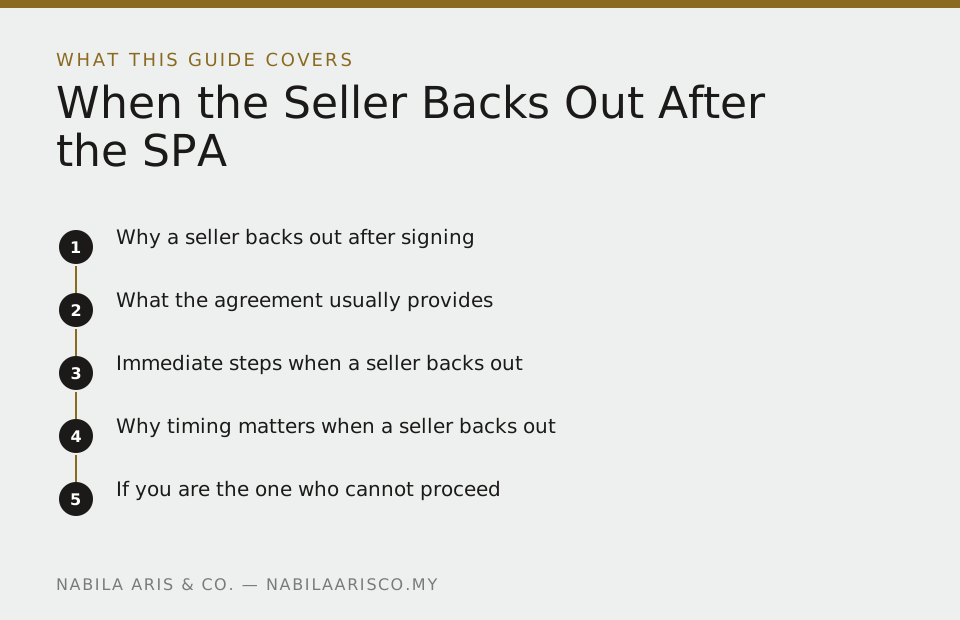
What this seller backs out guide covers
This is a stressful situation, particularly if you have paid a deposit and arranged financing. The first thing to understand: a signed agreement has effect, and a seller cannot simply change their mind without consequence.
Why a seller backs out after signing
- A higher offer from another buyer
- Family or co-owner issues where someone does not agree
- A title problem the seller has only just discovered
- The seller cannot settle the existing charge
- A change of mind with no reason given
What the agreement usually provides
A sale and purchase agreement normally contains a default clause setting out what happens if a party fails to complete. For a seller’s default this often includes return of the deposit plus a sum as compensation. The exact terms vary, so the actual wording of your document decides the position.
Immediate steps when a seller backs out
- Do not agree to cancel verbally. Any agreement should go through solicitors and be in writing.
- Gather the documents. The agreement, the deposit receipt, the loan offer, and all written communications.
- Take advice promptly. Some protective steps are more effective if taken early.
- Consider protecting your interest. In certain circumstances a buyer’s interest can be protected by a caveat under the National Land Code 1965. Whether that is appropriate depends on your position and has to be assessed.
Why timing matters when a seller backs out
If the seller tries to sell to another buyer, delay in acting can complicate matters. Once a third party is involved, resolution becomes harder and more expensive.
If you are the one who cannot proceed
The position reverses but the principle is the same: what the agreement provides for the buyer’s default. This usually involves the risk of losing the deposit.
Say so early, in writing. A buyer who is candid early usually negotiates a better outcome than one who disappears until the period expires.
Check the loan clause. If the failure is due to a loan rejection and the clause exists, your position is much better.
Do not stop paying or stop communicating without advice. A breach without basis can mean the deposit is forfeited and a further claim follows.
What can be avoided from the start
Most of the cases we see were detectable before signing: an absent co-owner, a charge the seller cannot settle, or a caveat already in place. A title search and proper checks before signing reduce this risk considerably.
Remedies usually available
A sale and purchase agreement normally provides that a seller in breach must return the deposit and pay an equal sum as compensation. The actual figure depends on the terms written in.
A buyer can also consider specific performance, that is, compelling the seller to complete. It is a stronger remedy but requires court proceedings and takes time.
Entering a caveat may prevent the seller from selling to someone else while the dispute is resolved. It needs a proper basis, and a valid sale and purchase agreement normally satisfies that.
Protection that belongs in the agreement
Clear clauses on return of the deposit and on compensation reduce disputes. A properly drafted agreement sets out what happens in each situation.
A title search before signing shows whether the seller can actually deliver a clean title.
A deposit held as stakeholder money, rather than paid straight to the seller, is the most basic protection a buyer has.
Questions worth asking now
What my agreement says about the seller’s breach.
Which remedies are practical in my situation, and how long each takes.
Whether entering a caveat is appropriate to protect my position meanwhile.
What evidence I should gather now.
Whether there is a time limit I have to observe.
Frequently asked questions about seller backs out
Can I force the seller to sell?
This depends on the terms of the agreement and the circumstances. There are remedies that may be available, but their suitability has to be assessed against your documents.
Is my deposit safe?
A deposit held as stakeholder money is better protected than one released directly to the seller. This is why how the deposit is held matters.
How quickly do I need to act?
As soon as possible. Some protective steps are more effective before a third party becomes involved.
The seller says a co-owner does not agree. What does that mean?
Where a property is jointly owned, all registered proprietors have to agree. This should be checked before signing through a title search.
Ready to start your property matter?
An initial consultation with no obligation. Tell us about your matter and we will explain what is involved and what it is likely to cost.
No 1, Jalan Setia Dagang AL U13/AL, Setia Alam, 40170 Shah Alam, Selangor
014-4004293 · Monday to Friday, 9:00am to 5:00pm