Entering and Removing Caveats
Entering a caveat to protect your interest in land, and applying to remove a caveat that is blocking your transaction.

Removing a caveat is the procedure for taking the caveat entry off the title so that registration can proceed. A caveat is an entry on the title that blocks registration of dealings until it is resolved. It protects a genuine interest, but a caveat without a proper basis invites a challenge, and the caveator can end up liable for the loss it causes.
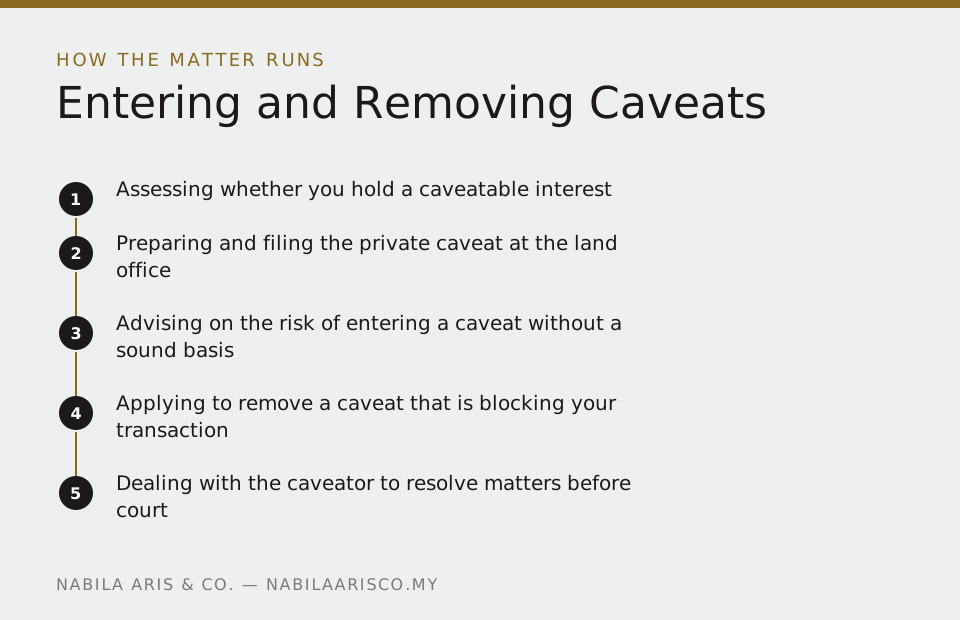
The removing a caveat process step by step
A caveat is a protective tool, not a pressure tactic. It is useful where there is a genuine interest to protect while an issue is resolved, and it causes trouble when entered without a basis.
When a caveat is appropriate
A caveat is appropriate where you hold a caveatable interest and there is a real risk the property will be transferred or charged before your interest is dealt with. Common examples: a buyer who has paid a deposit and signed an agreement, or a beneficiary whose interest in an estate is not yet registered.
A caveat is not ownership
This is the most common misunderstanding. A caveat blocks registration of dealings, but it does not make the caveator the owner and it does not decide who is right. It buys time for the issue to be resolved.
When removing a caveat becomes necessary
For an owner who finds a caveat on the title, the first step is finding out who entered it and on what basis. Sometimes it can be resolved through correspondence and a settlement. If not, an application to remove it can be made under the applicable procedure.
The risk of entering or removing a caveat without a basis
A caveat entered without a caveatable interest can be challenged, and the caveator can be liable for the loss the owner suffers through the stalled dealing. That is why we assess the basis of the interest before filing, not after.
The evidence needed to enter a caveat
A caveat requires a caveatable interest, not merely a feeling of being affected. A valid sale and purchase agreement, a traceable financial contribution, or a right as a beneficiary in an estate are among the bases usually accepted.
The statutory declaration has to set out that basis clearly and support it with documents. A vague declaration is the main reason caveats get removed once challenged.
Keep a copy of everything filed. If the caveat is later challenged you have to show the basis quickly, and hunting for documents at that point is usually too late.
Options when a caveat blocks your sale
There are three routes. First, negotiate with the caveator and settle the claim. This is usually the fastest and cheapest where the claim is reasonable.
Second, apply to the registrar to remove the caveat. The caveator is then given a period in which to obtain a court order maintaining it. If they do not, the caveat lapses.
Third, apply directly to the court. This is the most expensive route but it is the one needed where the caveat is plainly without basis and you want to claim compensation for the loss suffered.
What your lawyer handles
- Assessing whether you hold a caveatable interest
- Preparing and filing the private caveat at the land office
- Advising on the risk of entering a caveat without a sound basis
- Applying to remove a caveat that is blocking your transaction
- Dealing with the caveator to resolve matters before court
- Representing you if the matter goes to court
Documents you need to prepare
- Copy of identity card
- Copy of the title or the title particulars
- Documents supporting your interest, such as the sale and purchase agreement or proof of payment
- Correspondence relating to the disputed dealing
Costs people often overlook
- Legal fees for preparation and filing
- Caveat registration fee at the land office
- Official title search costs
- Service tax of 8% on legal fees
When to stop and get advice first
- Entering a caveat without a caveatable interest, which can lead to a claim for damages
- Treating a caveat as ownership, when it only blocks registration
- Waiting so long that the owner has already transferred the property to a third party
- Not notifying the owner, so the matter escalates into a full dispute
- Signing a settlement without understanding the effect of withdrawing the caveat
Frequently asked questions about removing a caveat
What is a caveat?
It is an entry on the title that blocks registration of dealings until someone resolves the issue. It does not give the caveator ownership.
Who can enter a caveat?
Someone holding a caveatable interest in the land. You have to state that interest and support it with documents.
How long does a caveat last?
A private caveat runs for a statutory period, and the applicable procedure governs how you extend or remove it.
A caveat is blocking my sale. Can it be removed?
You can apply to remove it. The procedure depends on the type of caveat and whether the caveator defends it.
Is there a risk in entering a caveat?
Yes. A caveat without a sound basis invites a challenge, and the caveator can end up liable for the loss it causes.
Ready to start your property matter?
An initial consultation with no obligation. Tell us about your matter and we will explain what is involved and what it is likely to cost.
No 1, Jalan Setia Dagang AL U13/AL, Setia Alam, 40170 Shah Alam, Selangor
014-4004293 · Monday to Friday, 9:00am to 5:00pm