Love and Affection Transfer
Transferring property between close family members, with the stamp duty relief that applies according to the relationship between transferor and transferee.

A love and affection transfer is a transfer between close family members that can attract stamp duty relief. A transfer between close family members can attract stamp duty relief, with the rate of relief depending on the relationship between transferor and transferee. Transfers between spouses generally receive full relief, while transfers between parent and child receive partial relief. Check the rate and conditions against the position in force at the time.
The love and affection transfer process step by step
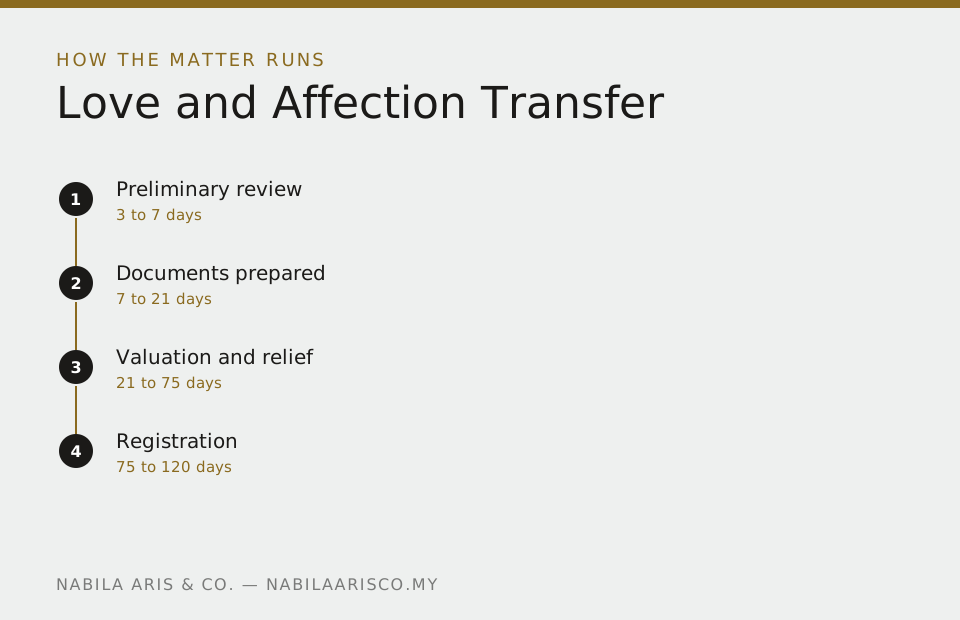
A love and affection transfer is a transfer of property between close family members, made while the transferor is alive. It is commonly used by parents transferring property to a child, or between spouses.
Stamp duty relief on a love and affection transfer
This type of transfer attracts stamp duty relief, with the rate of relief depending on the relationship between transferor and transferee. Evidence of the relationship is required, usually a birth certificate or marriage certificate.
The relief is not automatic. It has to be applied for with the correct supporting documents, and a valuation of the property is still carried out.
What to think about before a love and affection transfer
A lifetime transfer is final. Once registered, the property is no longer yours, and no longer part of your estate.
If you have several children and transfer property to only one of them, it can lead to a dispute later. That is not a legal obstacle, but it is something worth discussing within the family first.
For Muslim families, the effect of a lifetime transfer on the later distribution under faraid also needs to be understood, since property that has already passed is no longer subject to that distribution.
Effects people rarely think through
A love and affection transfer solves one problem and sometimes opens another. Once the property changes hands it belongs to the recipient entirely. If the recipient later runs into financial trouble, or divorces, or dies first, the property follows the recipient’s circumstances, not the giver’s.
There is also an effect on gains tax when the recipient later sells. The holding period is recalculated under the rules that apply to transfers between family members, and that can change the rate charged on a future sale.
If the property is still charged, the bank has to agree before the transfer can be registered. Some banks require the loan to be redeemed in full first, and that changes the arithmetic completely.
Alternatives worth comparing first
If the aim is to make sure the property reaches a child after death, a will or a conditional gift may suit better than an outright transfer during your lifetime. Each carries different costs, tax effects and degrees of control.
If the aim is to avoid a long estate matter, a lifetime transfer does solve that, but you lose control over the property immediately.
Talk to everyone affected before the documents are prepared. Transfers made without the knowledge of other family members are a frequent source of disputes that end up in court.
A love and affection transfer is only one of several routes. If you are not yet sure which one applies to you, read the title transfer process, by reason first.
What your lawyer handles
- Checking the title and the status of any existing charge
- Confirming the family relationship and the stamp duty relief that applies
- Preparing the transfer instrument and the related forms
- Applying for stamp duty relief with supporting evidence of relationship
- Coordinating with the bank where the property is still charged
- Presenting the transfer for registration at the land office
Timeline
Documents you need to prepare
- Copy of the identity card of the transferor and the transferee
- Birth certificate or marriage certificate to evidence the relationship
- Copy of the title
- Loan details if the property is still charged
- Consent from the bank where relevant
Costs people often overlook
- Stamp duty after any relief that applies
- Legal fees for the transfer instrument
- Land office registration fee
- Service tax of 8% on legal fees
- Redemption costs if you have to discharge an existing charge first
When to stop and get advice first
- The property is still charged and the bank will not agree to a transfer without redemption
- The transferor has several beneficiaries and a lifetime transfer may cause a dispute later
- The property is Malay reserve land and the transferee is not eligible to hold it
- The property carries a restriction in interest requiring State Authority consent
- The transfer aims to defeat creditors, which opens it to challenge
Frequently asked questions about love and affection transfer
Who qualifies for the stamp duty relief?
Relief applies to certain family relationships, at rates that differ by relationship. We check your eligibility against the documents evidencing the relationship before the matter starts.
Can I transfer if the property still has a loan?
It requires the bank's consent. In many cases the transferee has to redeem or take over the loan first.
Is this the same as hibah?
No. A love and affection transfer is a land registration matter carried out during the transferor's lifetime. Hibah is a concept in Islamic law with its own requirements.
Can I reverse it after registration?
Once registered, ownership has passed. Reversing it requires a fresh transfer with the transferee's consent.
How does it affect my estate later?
Property transferred during your lifetime is no longer part of your estate. Talk it through with the other beneficiaries before you decide.
Ready to start your property matter?
An initial consultation with no obligation. Tell us about your matter and we will explain what is involved and what it is likely to cost.
No 1, Jalan Setia Dagang AL U13/AL, Setia Alam, 40170 Shah Alam, Selangor
014-4004293 · Monday to Friday, 9:00am to 5:00pm